The Town of Ajax budget explains how municipal funds are collected and used to support services, programs, and infrastructure. Browse the sections below to learn more about the budget process and related financial reports.
Budgets
2026 Mayor’s Budget
The 2026 budget is brought forward under new legislation.
Section 284.16 of the Municipal Act assigns the Mayor the responsibility of preparing and distributing a proposed budget to Council no later than February 1 of each year.
Past Budgets
Capital Budget - 2023 to 2025
The capital budget includes major infrastructure projects such as roads, vehicles/equipment, parks, sidewalks, trails, streetlights, playgrounds and buildings. It includes both the development of new, and the maintenance/rehabilitation of existing infrastructure.
- 2025 Budget Presentation
- 2025 Capital Budget and 2026-2024 Long Range Capital Forecast – Amended
- 2024 Capital Budget Presentation (January 15)
- 2024 Capital Budget and 2025-2033 Long Range Capital Forecast – Amended
- 2023 Capital Budget Presentation
- 2023 Capital Budget and 2024 – 2032 Long Range Capital Forecast – Council Amended
Operating Budget - 2023 to 2025
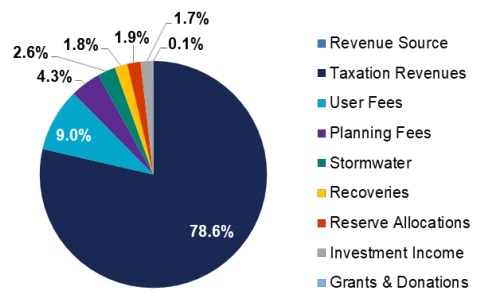
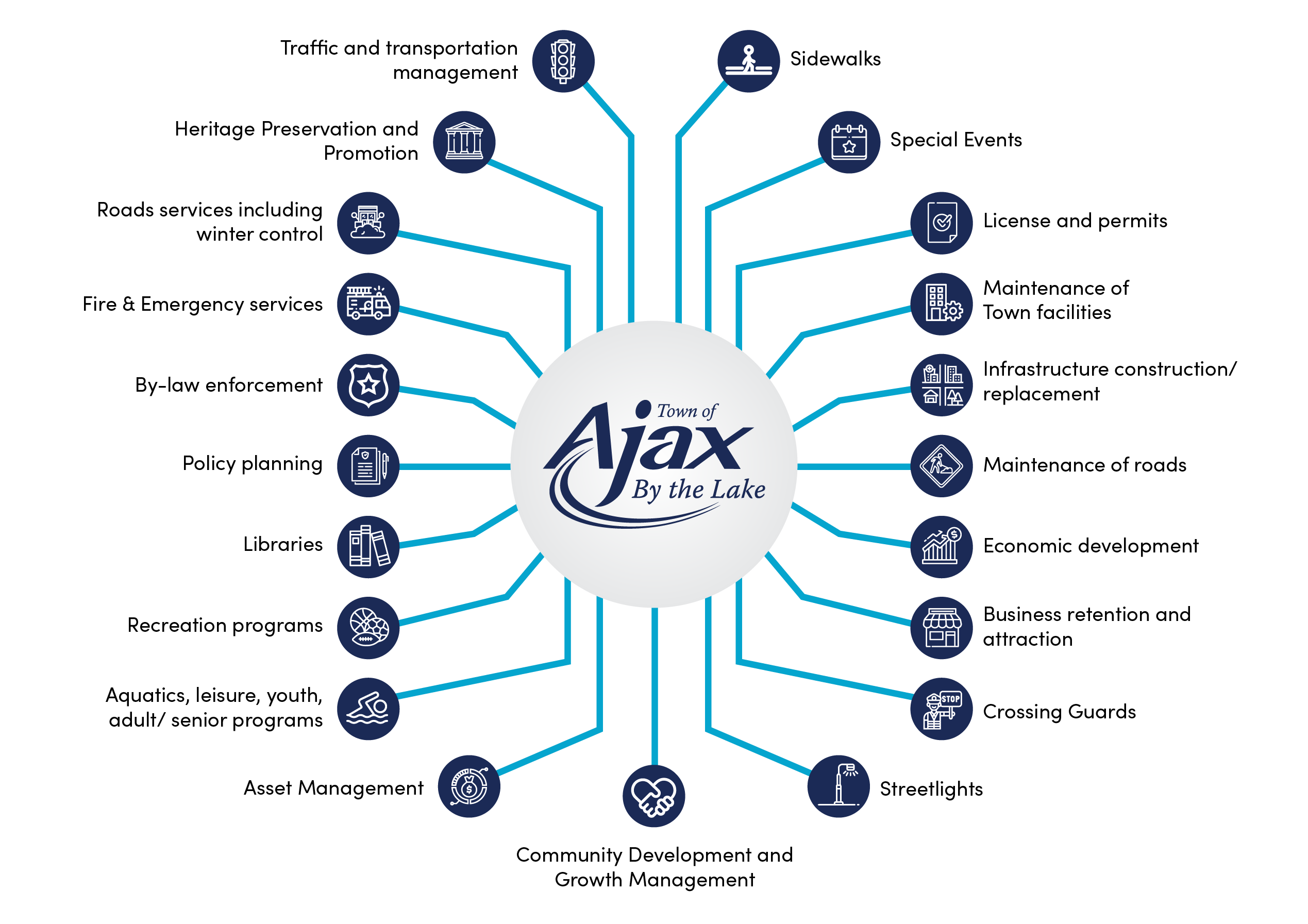
The operating budget covers day-to-day spending on services such as roads maintenance, community centres, parks and sportsfields maintenance, fire emergency services and community development. Approximately 70% of the funds for the operating budget come from property taxes. The balance comes from a variety of sources such as from user and permit fees and licences.
Understanding the Budget
A continuous, often complex 12 month process, budgets and forecasts draw information and direction from a wide range of sources. The budget is not an isolated event; rather it is an ongoing integrated process that translates the Town’s services, service levels, policies, public input and plans into a single, consolidated financial road map.
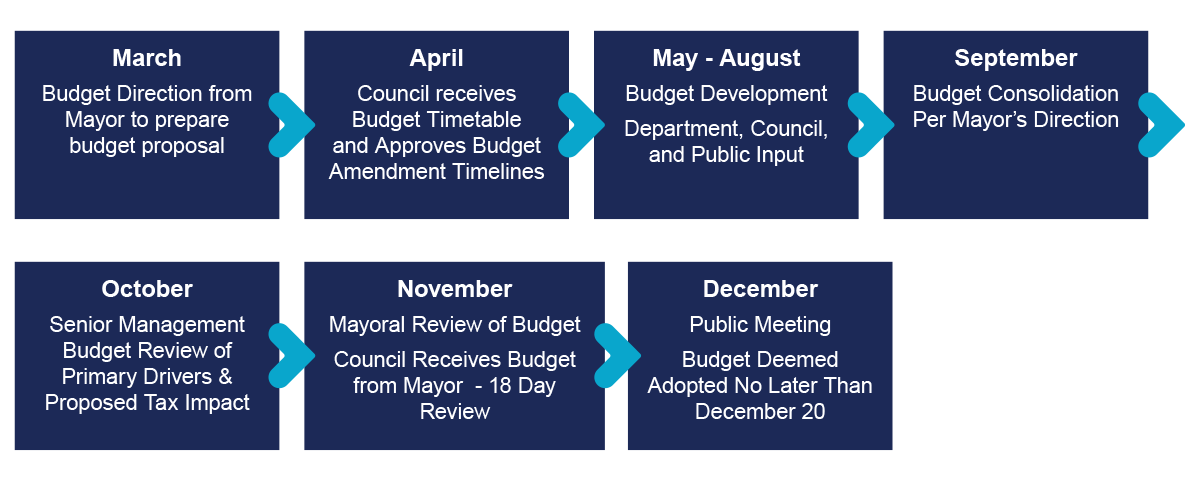
The following chart summarizes the key events and dates in the budget/forecast budget:
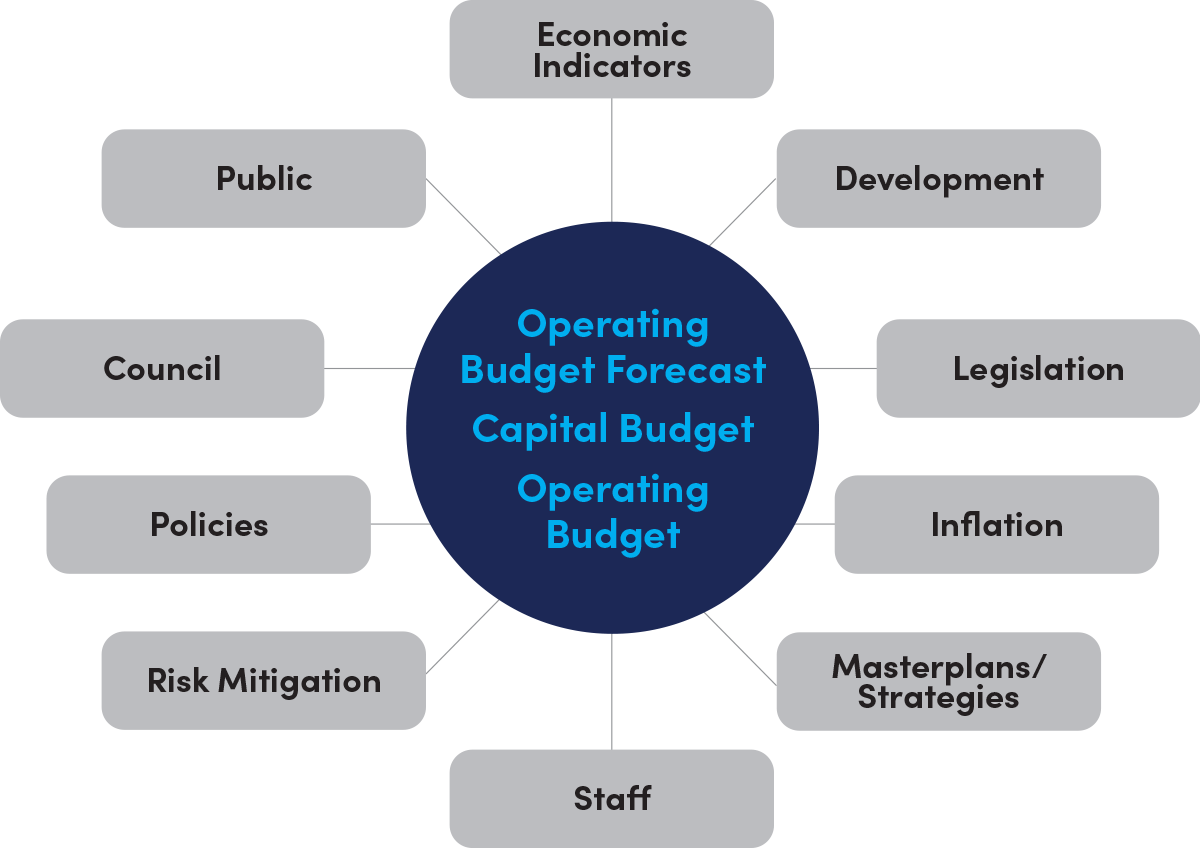
The Town’s budget consists of the following six components:
Operating Budget
The operating budget includes all of the expenditures (e.g., wages/benefits, supplies, contracted services, utilities, etc.) required to deliver day to day Town services. It also includes the non-tax revenues that we receive (e.g., ice rentals, hall rentals, fitness fees, planning and development fees, etc.).
The operating budget for the Town consists of 10 departments, over 185 separate business units and more than 4000 individual line accounts. The operating budget is prepared based on existing service levels which are then adjusted for the cost of supporting new growth in the Town (i.e., providing services to the new homes and businesses) and legislative requirements
The amount to be raised from taxation is based on the approved Net Operating Budget, which is calculated as the Gross Operating Expenditures less Operating Revenues/Recoveries received from non-tax sources (such as user fees, fines, interest income etc.)
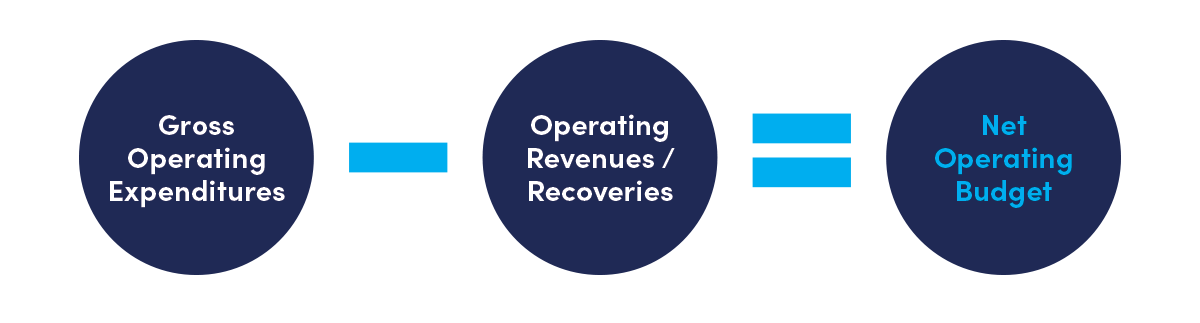
Capital Budget/Long Range Capital Forecast
The budget and forecast include one-time expenditures for major projects (often referred to as “infrastructure”) such as roads, vehicles/equipment, parks, trails, playgrounds and buildings; as well as studies and information technology. It includes both the development of new and the maintenance/rehabilitation of existing infrastructure.
The budget covers a one-year period (the upcoming budget year) while the long range capital forecast covers the following nine-year period. The ten years of the forecast period are reviewed and revised annually as part of the budget process.
The funding for capital projects comes from a wide range of different sources, with the most common ones listed below:
- Development Charges
- Casino Ajax Revenues
- Reserves and Reserve Funds
Business Cases
Requests for new staffing, projects and other initiatives proposed by staff are documented in Business Cases for consideration by Council through the annual budget process.
Costs may include salaries/benefits for new full time or part time staff required to maintain existing service levels, comply with Provincial and other legislation, undertake new initiatives, or add new services, etc.
It may also include other costs and revenues associated with the expansion of existing programs or undertaking new initiatives and services.
Library Grant
The Ajax Public Library operates independent of the Town of Ajax, however the grant provided by the Town to the Library accounts for approximately 93% of the Library’s annual operating budget. One member of Council sits on the Library Board and participate in the Board’s decision making processes. The Board provides reports to Ajax Council as required throughout the year and provides their annual grant request as part of the Town’s budget process.
Other Taxation Revenue
These revenues reduce the general levy amount that must be raised by property taxes. It includes:
- Supplementary taxes, which are taxation revenues raised during the year from new homes and businesses as they are assessed and added to the tax rolls.
- Payments in Lieu of Taxation (PIL), Linear Properties (Railway Lines and Hydro Corridors) and Taxable (Shared PIL) properties which are payments received from other governmental bodies that are not required to pay property taxes, but make payments to the Town to offset the cost of services they receive.
The following is a simplified explanation of the complicated process of calculating property tax rates:
Step 1: Calculate the Net Operating Budget
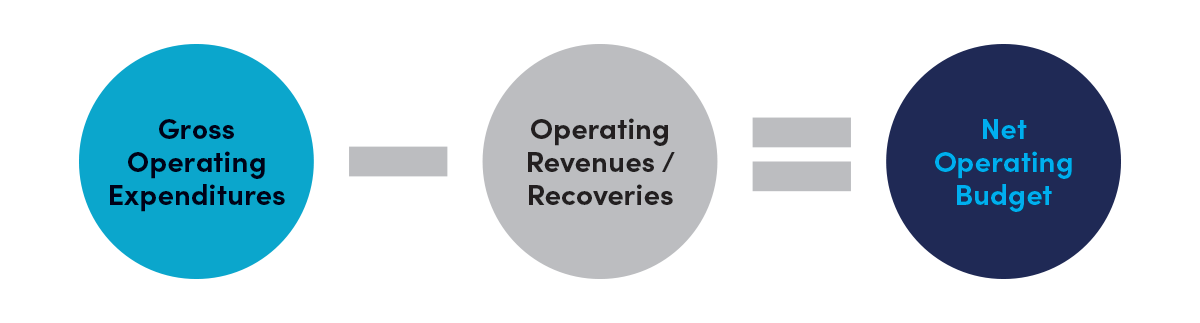
Step 2: Calculate Amount to be Raised by Taxation

Step 3: Update Tax Ratios
All property classes have a defined ratio, relative to the Residential class which is set at 1.000. By comparison, the ratio for the Commercial class is 1.4500. Tax policy refers to changing (usually lowering) a non-residential ratio, which transfers the tax burden to other property classes, primarily to the Residential class. Tax policy decisions are the responsibility of the Region of Durham, in consultation with the area municipalities.
Step 4: Tax Rate Calculation
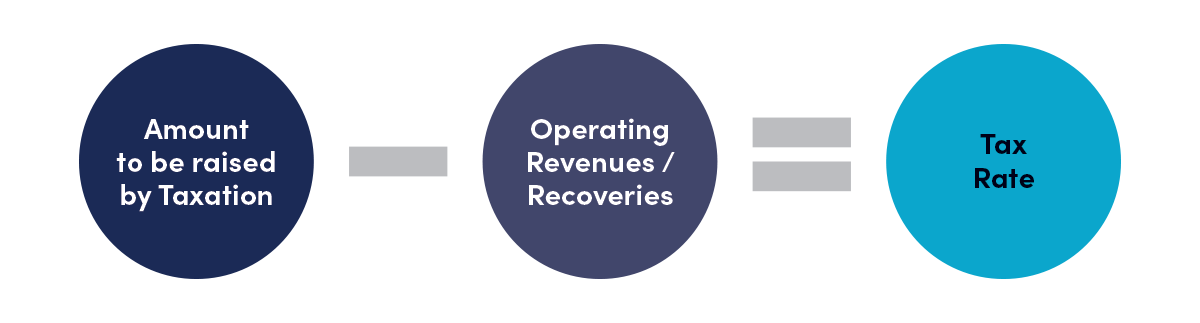
Step 5: Your Property Tax Calculation
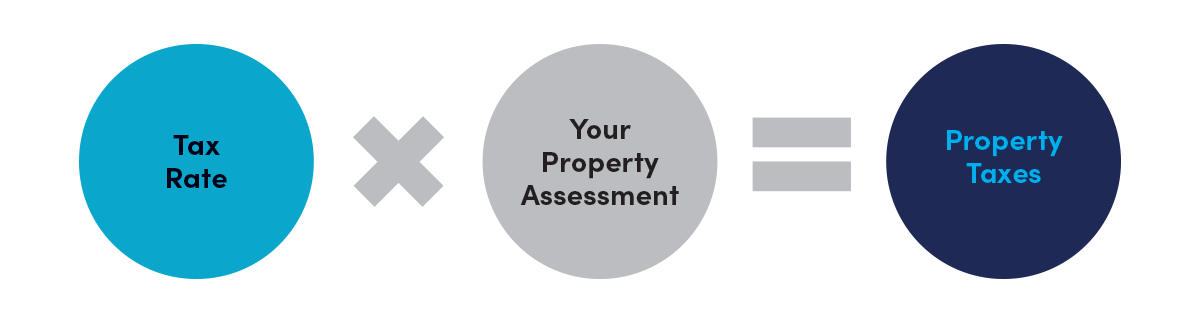
While assessment is the responsibility of the Municipal Property Assessment Corporation (MPAC), the rules and regulations about assessment are set by the Province of Ontario. Reassessments are completed every four years, with assessment increases phased in equally over the four year period.
- Impact on Town – The Town does not get any additional tax revenue as a result of reassessment (i.e., it is revenue neutral). The first step each year is to lower the existing Town tax rate to reflect the fact that the Town now has a higher assessment base.
- Impact on Individual Taxpayer – Taxpayers may see an assessment related increase or decrease, depending on their assessment increase relative to the Town and Region averages. The Province has mandated that assessment related increases be phased-in equally over four years, while assessment related decreases are granted immediately.
The most recent reassessment was completed in 2016. Due to the pandemic, the reassessment scheduled for 2020 was postponed and no new reassessment date has been determined at this time.
How the Town Estimates the Projected Annual Surplus or Deficit
The Operating Budget Forecast is an estimate of the total operating expenditures and revenues for the current budget year. The difference between the forecast and the budget results is an estimated operating budget surplus or deficit for the current year.
This Forecast serves a number of short and long term financial planning purposes including:
- Preliminary identification of trends, issues, etc., that may need to be incorporated into the following year’s operating budget
- If an operating surplus (revenues are greater than expenditures) is projected, the forecast provides an estimated amount available for transfer to capital reserves, which can be an important revenue source for the upcoming Capital Budget and Long Range Capital Forecast
- If an operating deficit (expenditures are greater than revenues) is expected, strategies will be developed to address the shortfall, usually by transferring funds from the Stabilization Reserve. If the funds in the reserve are not sufficient to cover the deficit, the remaining amount must be added to the next year’s tax levy.
Have Your Say!
To effectively and efficiently deliver services to the community, public input, feedback, comments, suggestions are essential.
There are numerous ways for Ajax residents to get involved:
- Participate in the budget meeting. Pre-registration is required for remote participation in the budget meeting. Please email clerks@ajax.ca to register.
- Ongoing correspondence and interaction with Mayor and Council
- Contact, correspondence, discussions with Town staff
- Public Forums
- Regularly scheduled Council, General Government Committee and Community Affairs and Planning meetings
- Quality system customer feedback
- Customer Polling
Financial Sustainability Plan
In June 2013, Council approved a Financial Sustainability Plan (FSP).
Building upon the foundation of the Town’s existing strategic financial planning, the FSP focuses on discretionary reserves, capital project funding and long term debt. In June 2015, minor updates were approved to the FSP related policies.
Following are the reports and presentations presented to General Government Committee (GGC):
Canada Community Building Fund
The Canada Community-Building Fund (formerly known as the Federal Gas Tax fund) is a permanent annual source of infrastructure funding from the federal government for Canada’s municipalities based on eligible project categories producing community and environmental benefits.
The Town of Ajax identifies the Canada Community-Building Fund (CCBF) funded capital projects in the annual Capital Budget and Long Range Capital Forecast.
Through the Association of the Municipalities of Ontario (AMO), municipalities report annual expenditures of these capital projects and provide outcome reports for completed projects.
Corporate Asset Management Plan
The Town of Ajax’s Corporate Asset Management Plan gives an overview of the Town’s municipal asset health and its financial preparedness in order to meet the levels of service expectations of the community.
The Corporate Asset Management Plan will be updated at least every 5 years and this will align with the goals of Council.
In accordance with O. Reg. 588/17, this plan outlines the proposed levels of service for the Town’s tangible capital infrastructure assets, the condition of all Town assets, and growth forecasts for the Town of Ajax. This plan forecasts the 10-year financial capital and operational needs of the Town of Ajax.
Asset Management Policy
The Asset Management Policy outlines the governance of responsibly managing Town owned infrastructure, incorporating current levels of service, risk, climate change, economic growth, and financial capacity. It provides a framework to Town staff on how to efficiently manage municipal assets.
Asset Management Progress Reports
Asset Management Progress Reports are developed annually to determine how the Town of Ajax is progressing with the asset management of its infrastructure. The municipality also identifies any impediments that any service area faced while trying to implement asset management initiatives and develop strategies to address these impediments in the future.

OLG Slots Casino Ajax
Revenues from Casino Ajax has allowed the Town to strategically invest in infrastructure and community and neighbourhood initiatives.
Frequently Asked Questions About Budgets and Financial Reports
There are three main reasons for this difference, not only between Ajax but between other GTA municipalities as well:
- Special Provincial Funding – since amalgamation in 1998, the Province has given the City of Toronto millions of dollars in special grants and loans, funding which was not provided to any other municipality in Ontario.
- Toronto Business Taxes Subsidize Residential Taxes – Toronto has historically taxed their businesses at much higher rates than other jurisdictions, which allows Toronto to keep residential taxes lower. A commercial business in Toronto pays 3.2 times more in taxes than a homeowner, while in Durham Region that same business only pays 1.5 times more.
- Special Taxing Powers – The Province has granted Toronto the authority to charge special taxes or levies (e.g. land transfer tax), which also allows them to keep their residential property taxes lower.
When people talk about inflation, they are usually referring to Statistics Canada’s Consumer Price Index (CPI), a theoretical “shopping basket” of consumer goods. Unfortunately, CPI does not reflect the cost increases that all municipalities face for expenditures such as contracted goods/services, utility costs for streetlights and large facilities, insurance, building materials, asphalt, concrete, etc.
The Town calculates its own Municipal Price Index (MPI) which reflects the cost of the goods and services used by the Town to deliver services. This MPI is used to assess user fee increases and ensure that inflationary changes are reflective of the ‘basket of goods’ used specifically by municipalities and includes costs related to service delivery, maintenance of municipal infrastructure, public safety, regulatory and legislative requirements.
While each budget year brings a new set of issues, there are four main challenges impacting both current and future budgets:
- Continuing Growth – While providing services to new homes and businesses does come with a cost, growth does provide a number of revenues that help minimize tax increases. These revenues include assessment growth, supplementary taxes, development charges and planning & development fees.
- Existing Infrastructure – The Town has a vast network of existing roads, trails, sidewalks, buildings, playgrounds, parks, streetlights, etc. and that network is added to each year as new development occurs. It is essential that the Town spend the funds necessary to keep these assets in good repair and to avoid higher maintenance costs in the future.
- New Town Facilities – Audley Recreation Centre Phase two, Pat Bayly Square and Paradise Park are examples of important new community spaces that have been constructed recently. The operating cost of new facilities can make it difficult to maintain tax increases below the rate of inflation.
- Legislative Impacts – A number of legislation requirements continue to impact the Town’s Operating Budget including: Bill 148 Fair Workplaces, Better Jobs Act, increase in minimum wage, updates to the rate frameworks for both Workplace Safety & Insurance Board (WSIB) the Canada Pension Plan (CPP) and implementation of Asset Management reporting requirements. The impact of these legislative impacts significantly impact the operating budget. For example, in 2018 the budget impact of Bill 148 was $703,500 with $266,000 additional costs incurred in 2019.
- Increasing Costs – Some cost increases are within the Town’s control but many are not. Inflation on goods and contracted services, challenges such as public health emergencies and climate change, can drive up the cost of service delivery and capital projects.
Many services offered to residents are available equally to all and these would be included as part of your property taxes. Examples include Fire protection, snow plowing of roads, grass cutting in parks etc. User fees are the rates charged for the delivery of products or services to residents that are optional and offered on a fee for service basis. Examples include rental of meeting rooms, purchase of a permit, enrollment in a day camp program etc.
No this is not always possible. Although these fees are reviewed annually and compared against other areas and similar municipalities, staff balance the recovering of charges and ensuring that programs and services are offered to the public in an affordable and responsible manner.
Provincial legislation, specifically the Development Charges Act, requires municipalities to contribute to certain development projects. Other legislative requirements can further increase the amount a municipality must contribute. While recent legislative changes have broadened the scope of project costs that can be recovered through Development Charges, certain capital items such as administration buildings and the acquisition of parkland, are exempt and must be 100% paid for by taxpayers.
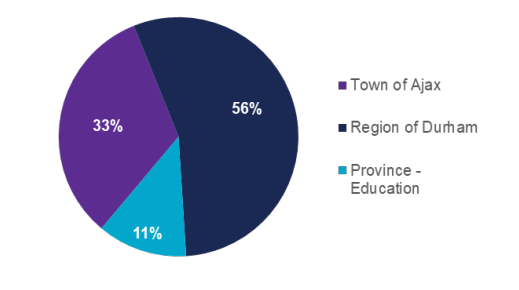
The Town only controls 33% of the total tax bill, with the Region responsible for 56% and the final 11% controlled by the Province for education. If the Region and/or Provincial increases are higher than the Town’s, then your total increase will be higher than the Town’s increase.
Also, a reassessment related increase (where the value of your property is increasing at a faster rate than the average for the whole municipality) may cause your total tax increase to be higher.
In 2005, all municipalities signed an agreement in order to receive the Federal Gas Tax fund which was updated in April 2014 and is in place until 2023. The government recently changed the name of this grant to the Canada Community Building Fund. To date, Ajax has used the money to make the new Fire Headquarters/Training Facility, Operations & Environmental Services Operations Centre and the Audley Recreation Centre, green, energy efficient LEED certified buildings. The Town is focusing CCBF funds towards capital expenditures for road resurfacing/reconstruction, energy efficiency (e.g. LED Lighting), storm water quality, storm water management pond maintenance, Sportsfield and Recreation capacity, non- DC portion of Transportation and Recreation services, and Asset Management.
The Town’s two major non-property tax revenues, revenues from Slots at Casino Ajax and Elexicon investment income are subject to potential changes.
Slots Revenues – In 2018, the Town’s budget included $7,687,500 for slots revenue. The majority of the slots revenue is dedicated to reserves that fund the construction and maintenance of infrastructure. In March 2018, the provincial government and OLG announced that Pickering would host a new Casino, which opened in July 2021. In 2020, Covid caused the closure of the Casino and as a result, revenues dropped to $1,728,830 Closures persisted into 2021 and a significant decline in revenues is expected beyond 2021.
See following chart, 2025 Operating Revenues by Source: